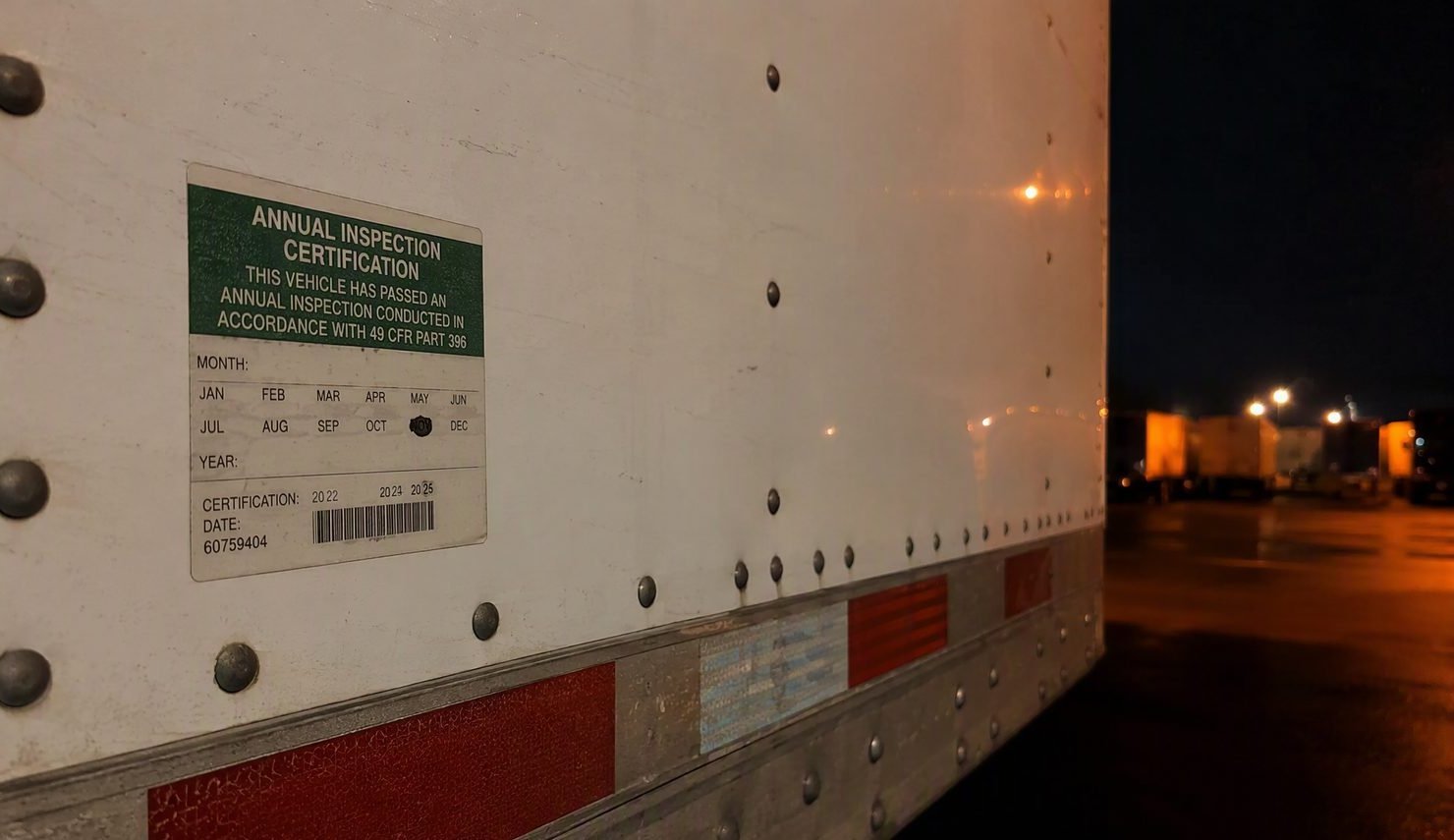
I got woken at 3:14 in the morning last March because one of my trucks was sitting in a Connecticut weigh station with an expired apportioned plate and a trooper who didn't care that the renewal check had been mailed eleven days earlier. The driver was legal to drive. The truck was legal to roll. But the registration was 31 days dead, and in that weigh station, on that night, 31 days dead was the only fact that mattered. The tow, the fine, the out-of-service order, the load that delivered nine hours late — all of it traced back to a date on a spreadsheet cell that nobody had looked at since October.
That's what this page is about. Not the theory of registration. The ugly, practical, deadline-by-deadline reality of keeping plates, permits, and tax receipts current across every jurisdiction your trucks touch. Because if you run interstate freight, you're not renewing one registration. You're maintaining a stack of them — federal, state, and a weird multi-state compact in the middle — and each one has its own calendar, its own forms, and its own enforcement people who have heard every excuse ever invented.
So let's go through the stack the way I rebuilt my own system after that Connecticut night: what's actually in it, when each piece dies, and how to make sure nobody in your company ever has to explain a lapsed plate to a scale master again.
The IRP: One Plate, Fifty-Nine Jurisdictions
The International Registration Plan is the agreement that makes interstate trucking survivable. Without it, you'd have to buy a full registration from every state your trucks enter — imagine paying for a California plate, a Georgia plate, and an Ohio plate for the same tractor, every year, forever. Instead, IRP covers all 48 contiguous US states, the District of Columbia, and most Canadian provinces, and it lets you register once in your base jurisdiction and share the money around.
Here's how the sharing works, because this is the part that confuses every new owner-operator I've ever met at a truck stop counter. You don't pay each state a flat fee. You pay each state a slice of its registration fee proportional to the percentage of your total miles you ran in that state. Run 18% of your fleet miles in Pennsylvania? You owe Pennsylvania 18% of what Pennsylvania would charge for a full registration. Run 2% in Vermont? Vermont gets 2% of its fee. Add all the slices together and that's your annual IRP bill. Your base jurisdiction collects the whole thing and distributes it.
The result, printed on one plate and one cab card, is a truck authorized to run loaded in every jurisdiction on that card. It's elegant. It's also a mile-counting obligation that never stops, because next year's bill is calculated from this year's miles, which means the odometer records your drivers think are "accounting stuff" are literally the inputs to a legal filing.
Your base jurisdiction is the state where the fleet is registered — where you have an established place of business, where the operational records live, where the vehicles are operated from. Everything flows through that state's IRP office, even when 90% of your miles happen somewhere else. Choose it, staff it, and know its renewal quirks cold, because it's the one door every one of your plates goes through.
One more thing about that mile math, because it's where honest fleets get hurt. Your IFTA fuel tax reports and your IRP distance figures come from the same odometers and the same GPS pings, so they should agree. When a base jurisdiction audits — and they do audit, usually looking back several years — the first thing the examiner does is lay your IFTA quarters next to your IRP reporting period and look for daylight between them. A fleet that reports 412,000 miles to one agency and 438,000 to another for roughly the same stretch of road has just explained to a stranger that at least one filing is fiction. Keep one master mileage ledger per unit, reconcile it monthly, and feed both filings from it. Same numbers everywhere, every time. It's not extra work; it's the same work done once instead of twice badly.
IRP Renewal: Annual, and the Math Has a Memory
IRP registration renews every year, and the renewal is not a rubber stamp. Each cycle you owe your base jurisdiction two sets of distance numbers:
- Actual distance by jurisdiction for the prior reporting period — and the reporting period is July 1 through June 30, not the calendar year. Every mile your fleet ran in every state during those twelve months gets tallied by jurisdiction.
- Estimated distance by jurisdiction for the coming registration year — your honest projection of where the miles will fall next year. New fleets and new jurisdictions get billed on estimates until they have real history.
Read that reporting window again, because it's the single most mangled fact in fleet compliance. IFTA runs on calendar quarters. Form 2290 runs August to July. And IRP mileage reporting runs July 1 to June 30. Three different clocks, all ticking in the same filing cabinet. I've watched experienced office managers grab January-through-December mileage for an IRP renewal because "that's the year, right?" — and then spend six weeks untangling an audit flag with their base state.
The practical consequence: on July 1, close the book. Freeze that mileage data, get it reconciled against your IFTA quarterly returns (the numbers should tell the same story, and auditors will check), and have the renewal package moving before the summer is out. Fleets that start their IRP renewal in the month it expires are fleets that run on temp permits, and temp permits are how you end up explaining yourself in a weigh station parking lot.
An expired IRP plate is not a "fix it later" problem. An out-of-service order at a scale means the truck stops moving until registration is restored — and "restored" means processed, not "mailed." Some states turn renewals around in days; others take weeks during peak season. File 60 days early. A load sitting still costs more than any early filing ever will.
The Cab Card: The Most Important Piece of Paper in the Truck
Every power unit in your fleet must carry its cab card — the IRP registration credential that lists every jurisdiction the truck is authorized to operate in, the registered weight for each, the plate number, the VIN, and the unit information. Original or legible copy, in the cab, reachable by the driver. Not in the office. Not "in the other truck." In that cab.
Two rules that burn people constantly. First, the cab card must match the plate — specifically, the card is issued by the plate's base state, and if a scale inspector sees a plate from one state and paperwork telling a different story, you've just volunteered for a much longer conversation. Plates and cards move as a set, always. Second, when a unit's registered weight or jurisdiction list changes mid-year — you add a state, you bump a weight class — the card must be updated and the new card must physically replace the old one. I've seen trucks cited at a scale for carrying last year's cab card that was 95% identical to the current one. The 5% difference was a weight group, and it cost an afternoon and a fine.
So every renewal cycle, build a physical handoff: old card out, new card in, driver signs for it. Sounds insulting. It saves trucks.
Scan every cab card the day it arrives. One shared folder, one naming convention — unit number, state, expiry date — and now your dispatcher can settle a roadside argument in ninety seconds from a phone. Paper gets lost in cabs. Scans don't.
Weight Groups: What the Class Numbers Actually Mean
Registration fees and permit requirements ride on registered gross weight, so your fleet's weight group declarations aren't trivia — they're pricing inputs and enforcement triggers. The classes you'll deal with most:
| Class | Gross Vehicle Weight | What Runs in It |
|---|---|---|
| Class 6 | 19,501 – 33,000 lbs | Medium-duty box trucks, beverage haulers, larger straight trucks |
| Class 7 | 33,001 – 60,000 lbs | Heavy straight trucks, smaller regional tractors, refuse and utility rigs |
| Class 8 | Up to 80,000 lbs gross | The standard over-the-road tractor-trailer — the most common OTR combination in the country |
Class 8 at 80,000 pounds gross is where most interstate freight lives, and it's where the scrutiny lives too. Declare a weight group honestly and consistently — your IRP cab card weight, your 2290 weight, and what the truck actually scales at should never be three different numbers. When they are, a scale master notices before you do, and a registration that says 60,000 while the truck weighs 78,000 isn't a clerical error in their book. It's evasion with paperwork.
The State Permit Layer Nobody Warns You About
And here's where it gets genuinely infuriating: an apportioned IRP plate does not cover everything. A handful of states maintain their own weight-based taxes or credentials on top of normal registration, and each one has its own account number, its own filing rhythm, and its own way of reminding you it exists — usually at the worst possible moment. The table below is the cheat sheet I keep taped inside the filing cabinet.
| State | Program | How It Works | Filing Rhythm |
|---|---|---|---|
| New York | Highway Use Tax (HUT) | Weight-based tax on NY miles for heavy vehicles; figure roughly $15 per 1,000 miles at common OTR weights. Requires HUT registration and a decal on the truck before rolling a single New York mile. | Quarterly returns; decal and account must exist in advance |
| Oregon | Weight-Mile Tax | Oregon skips a fuel tax for heavy trucks and taxes weight-distance instead. Separate tax account, per-mile rates by weight, and Oregon doesn't participate in IFTA — the mileage reports go to a different desk entirely. | Monthly or quarterly reports depending on your arrangement |
| Kentucky | KYU Number | A weight-distance tax license. No KYU number, no legal loaded Kentucky miles — and Kentucky checks at the state line, so this one gets discovered fast. | Quarterly returns |
| New Mexico | Weight-Distance Tax | Per-mile tax scaled by declared weight for vehicles over 26,000 lbs. Registration before operations, returns after. | Quarterly returns |
| Connecticut | Highway Use Fee (HUT) | A weight-based highway use fee on CT miles for heavy trucks, reported through its own portal with its own account. Yes, another one. | Quarterly filings |
Notice the pattern. Every one of these is quarterly-ish, every one wants its own account established before the truck crosses the line, and every one has a fine structure that starts small and compounds. The trap for growing fleets is the first load into a new state: the customer books Tuesday, the truck rolls Wednesday, and the permit desk opens Thursday. Build the accounts before you need the lanes. A KYU number costs you an hour. Getting caught without one costs you a morning, a fine, and a mark on your record.
Form 2290: The Federal Weight Tax With a Stamp
The Heavy Vehicle Use Tax is the IRS's slice — yes, the IRS, not DOT — for heavy vehicles on public highways, authorized under 26 U.S.C. 4481. The tax year runs August 1 through July 31 (a third clock, remember), and for vehicles at 55,000 pounds and up you're paying up to $550 per vehicle per year. You file Form 2290, you pay the tax, and the IRS gives you back a stamped Schedule 1.
That Schedule 1 is the point of the whole exercise. It's your proof of payment, and state registration offices — including your IRP base jurisdiction — require it before they'll renew a heavy vehicle's registration. No stamped Schedule 1, no plate renewal. The federal tax receipt is a dependency for the state credential, which means a late 2290 doesn't just create an IRS problem. It creates a parking problem, because your registration renewal is now stuck behind your tax paperwork.
So the sequence for any Class 8 fleet is fixed: file 2290 early in the window (the return for the new tax year is due by the end of August for trucks on the road in July), get the stamped Schedule 1 back, and file it away with the unit's registration packet. E-file it. A paper-filed 2290 in August can leave you waiting on a stamped Schedule 1 while your renewal window evaporates.
Put a truck into service mid-year and the 2290 clock starts that month — the tax is prorated, and the return is due by the end of the following month. New truck, new filing, every time. The IRS does not fold it into your next annual return, and the state won't renew the plate on a promise.
UCR: The Annual Fee Everyone Forgets
The Unified Carrier Registration is an annual federal registration for motor carriers, brokers, and leasing companies, and the fee scales with fleet size. The brackets, honestly stated: a carrier with 0–2 trucks pays $62 a year; a carrier with 3–5 trucks pays $185. Bigger fleets pay more, bracket by bracket, and the fee schedule gets adjusted from year to year — so check the current year's numbers before you budget, and don't assume last year's invoice is this year's price.
| Fleet Size (Power Units) | Annual UCR Fee |
|---|---|
| 0–2 | $62 |
| 3–5 | $185 |
| 6 and above | Higher brackets, set annually — verify the current schedule before renewal season |
UCR is cheap, fast, and online — and it's still one of the most commonly expired credentials in roadside inspections, precisely because it's cheap and fast and nobody owns it. It's due at the start of each registration year, enforcement can ask for proof at a scale, and a $62 lapse reads exactly the same on an inspection report as a $6,200 one. Assign it to a person. Give that person a date. Done.
NYSDOT Inspection: New York's Extra Layer
If you run trucks plated in New York — or operating in New York — the state requires its own annual NYSDOT safety inspection on heavy vehicles, on top of the federal annual inspection you already know about. It's a real inspection with a real sticker, and enforcement treats an expired one accordingly: an out-of-date New York inspection can draw a $300-plus fine, and the truck doesn't earn its way back into good graces until it's inspected and current.
The operational gotcha is the mismatch with your other calendars. Federal annual inspections ride on their own twelve-month cycle per vehicle; the state layer rides alongside it. Track both, per unit, or accept that a New York-plated truck will eventually get parked over a sticker that costs a fraction of the fine.
Staggering the Calendar So Nothing Stacks
Fifty states don't renew on one date, and thank heaven for that. Different states issue IRP renewals on different cycles, and fleets that operate across many base jurisdictions — or hold permits staggered by state — end up with a renewal rhythm that spreads across the year. The table below is a representative staggering pattern I've seen multi-state fleets use to keep the workload distributed. It's an example, not a statute — your base state's actual renewal month is whatever it says on your renewal notice — but the shape of the strategy is what matters: something small every month, never everything in one month.
| Month | Example Renewal Cluster |
|---|---|
| January | Oregon, Washington |
| February | Texas |
| March | Florida |
| April | New Jersey, California |
| May | Illinois, Georgia |
| June | Pennsylvania, Ohio |
| July | Michigan, North Carolina |
| August | Indiana, Arizona |
| September | Virginia, Tennessee |
| October | Missouri, Wisconsin |
| November | Massachusetts, Colorado |
| December | Alabama, South Carolina |
Two or three renewals a month is a manageable Tuesday. Twelve in one month is how cab cards end up in the wrong trucks and checks end up in the wrong envelopes. If your state lets you influence your renewal cycle, spread the fleet. If it doesn't, build your internal calendar around the actual dates and treat the clustering as a staffing problem you solve in advance.
How to Actually Track All of This
You don't need software for this. You need a spreadsheet, a color convention, and the discipline to look at it weekly. Here's the exact system that ended my 3 AM phone calls:
- One row per unit per credential. Unit 214's IRP plate is a row. Unit 214's 2290 Schedule 1 is a row. Unit 214's NYSDOT inspection, UCR, KYU filing — each its own row, each with its own expiry date and owner.
- Color-code by month, not by panic. Every expiry gets a month color, so a glance at the sheet shows you the shape of the year — the same spread as the calendar table above. If one color dominates, rebalance.
- 60 days out: the reminder fires. The row goes yellow, the owner starts the paperwork, mileage data gets pulled. Sixty days is enough runway for a slow state, a mileage dispute, or a missing document — the three things that actually delay renewals.
- 30 days out: urgency. The row goes orange. If the filing isn't submitted by now, the owner reports why in the weekly ops meeting. Not in an email nobody reads. Out loud.
- 7 days out: critical. The row goes red, and the question changes from "is it filed" to "is the truck parked on day one of expiry." A red row that isn't resolved means the unit comes off dispatch until it is. Yes, really. A parked truck costs a day of revenue. A caught truck costs the fine, the tow, the out-of-service record, and the customer.
And then the discipline part: somebody — one named human — owns the spreadsheet, reviews it every Monday, and has the authority to park a truck. Systems fail when "everyone" owns the renewal calendar, because everyone is nobody at 3 AM.
Put every deadline in the dispatch system too. If the board that assigns loads can see "Unit 214 — registration expires in 21 days," the unit never gets booked on a long lane it can't legally finish. Compliance that only lives in the office gets discovered on the road.
The 60/30/7 rhythm only works if day 60 is real. If your office treats the 60-day reminder as "we'll get to it," you've built a 30-day system, then a 7-day system, then a tow truck. The whole margin lives in the first sixty days. Spend it on paperwork, not on apologies.
The Point of All of It
None of this is complicated. That's the insult of it. IRP renews annually on July-to-June mileage. The cab card rides in the cab and matches the plate. Weight groups declare what the truck actually weighs. New York, Oregon, Kentucky, New Mexico, and Connecticut each want their own account before your wheels touch their pavement. The IRS wants its $550 and hands you a Schedule 1 your state won't renew without. UCR wants its $62 or $185 once a year. New York wants its own inspection sticker. Every single one of these items is a known date, known months in advance, costing known money.
And yet trucks get parked over them every day, in every state, because "known" and "tracked" are different verbs. Build the sheet. Color the months. Fire the reminders at 60, 30, and 7. Sign for the cab cards. Then sleep through the night — the scales can call somebody else's fleet manager.